The kidneys are vital organs that act as the body’s filtration system, keeping blood clean and free of toxins. They regulate blood pressure, water balance, pH levels, and minerals such as phosphorus, magnesium, and sodium. The nephron serves as the kidney’s functional unit. When the number of working nephrons decreases, kidney disease symptoms worsen. Fewer nephrons reduce the filtration rate, which limits the kidneys’ ability to efficiently remove waste products (1). When kidney function declines, waste products can accumulate in the blood, a condition called azotaemia (2).
Is The Kidney Disease Acute or Chronic?
| Acute Kidney Disease Symptoms | Chronic Kidney Disease Symptoms |
| Lethargy Diarrhoea Vomiting Disorientation Severe weakness Difficulty urinating | Excessive thirst Excessive urination Reduced appetite Weight loss Urinary infections Vomiting and diarrhoea |
Acute Kidney Disease (AKD)
Acute Kidney Disease develops suddenly, making diagnosis relatively quick. With proper medical and nutritional intervention, dogs can fully recover (3). AKD can result from reduced blood flow, exposure to toxins such as antifreeze or rat poison, or ingestion of toxic foods like raisins or grapes.
Chronic Kidney Disease (CKD)
Chronic Kidney Disease progresses slowly, with kidneys gradually losing function. Although CKD has no cure, careful management can slow its progression.
There a 4 progressive stages to CKD (4)
| Stage I – Damage begins to occur, but elevated waste products are not yet identifiable in the blood. Typically, no symptoms present. |
| Stage II – Waste filtration continues to decline, elevated waste products in blood and urine. Typically, no physical symptoms present. |
| Stage III – Waste filtration continues to decline, further elevating waste products in blood and urine. Symptoms begin to present as excessive thirst and urination. |
| Stage IV – Severe decline in kidney filtration, causing toxins to build up in the blood. Myriad of physical symptoms, including weight loss, vomiting, diarrhoea and lethargy. |
CKD develops in four progressive stages (4). Most dogs do not show noticeable symptoms until they have lost 70–75% of kidney function, typically at stages III or IV (2).
Dietary Management of Chronic Kidney Disease in Dogs
In dogs with kidney disease, as with any other condition, offering an appropriate diet is a priority. Many vets will recommend a ‘prescription’ kidney diet for dogs with CKD, which has altered protein, phosphorous and sodium levels. However, the condition can also be successfully managed with a raw diet, albeit with some certain criteria being met. Some of they key nutrients to consider are Protein, Phosphorous, Moisture, and Fats.
Protein
Dogs naturally derive energy from protein and fat. Protein quality depends on its amino acid profile, digestibility, and bioavailability, which is typically higher in animal sources than plant sources. Dogs with CKD should receive highly digestible, high-quality animal protein.
The efficacy of protein restriction divides opinion. Whilst protein moderation has been shown to improve symptoms in uraemic dogs, restriction of protein has not been shown to slow disease progression (1). Protein itself does not contribute to kidney damage, it’s the waste products of it’s digestion which can cause the issue. Thus, protein restriction is initially suggested, to reduce nitrogenous waste (5). In late-stage CKD, nitrogenous waste can accumulate, making protein restriction more necessary. Proteinuria may occur in advanced CKD due to glomerular damage, which worsens as nephron function declines. Protein intake may need to be moderately reduced to manage proteinuria, but very low-protein diets are not recommended.
Protein quality will also have an impact, which affects their digestibility, and subsequent waste products (this is important as the kidney is responsible for removing these). High-quality protein reduces nitrogenous waste. Eggs and raw meat are excellent choices for dogs with kidney issues, as they produce less waste than lower-quality protein sources. Raw animal protein is particularly suitable because it is easier to digest and generates fewer nitrogenous by-products (6).
Phosphorous
Phosphorus is essential for DNA, RNA, cell membranes, and ATP, making it crucial for life (7,8). The body maintains phosphorus through intestinal absorption and kidney excretion. When kidney function is impaired, phosphorous can accumulate in the blood. A lower phosphorus diet is recommended to ease stress on the kidneys. Phosphate binders, such as calcium carbonate, may be used to further limit phosphorous absorption, by binding the phosphorous in the food, allowing more flexibility when feeding (1). We suggest consulting your vet to discuss your dog’s options.
It is also important to note that not all phosphorus is equal. Inorganic phosphorous places more demand on the kidneys than organic phosphorous, as it is absorbed into the blood much more readily, meaning that there is more phosphorous for the kidney to excrete. Organic phosphorous is typically water soluble, and present in raw animal and plant ingredients in the diet. Whereas inorganic phosphorous is often added during processing, usually in the form of phosphate salts, to meet nutritional requirements (7). In fact, dietary phosphorous from natural food ingredients, such as meat and vegetables, does not appear to affect post-prandial plasma phosphorous levels as drastically as phosphorous salts (9).
Some low phosphorus meats include: Green tripe, Chicken, Duck, Rabbit
Some medium phosphorous meats include: Beef, Lamb, Turkey
The highest phosphorous foods are considered to be bones, dairy and organ meat (particularly liver), however this does not mean these foods need to be avoided, they should just be fed in moderation. Reducing phosphorus can also be achieved by emphasizing fattier meats with moderate, quality protein and low-phosphorus carbohydrates. Increase fat gradually to prevent digestive upset, and adjust for dogs prone to pancreatitis by lowering fat and increasing low-phosphorus vegetables.
Moisture
Ensuring adequate hydration is important in all animals but is particularly important for those with kidney disease. Feeding a dry food with inherently low moisture content (<10%), will exert chronic stress on the kidneys if the daily water quota is not met, increasing the risk of kidney disease and stones (10). A raw diet contains >60% moisture, allowing dogs to receive hydration through their meals.
Fats
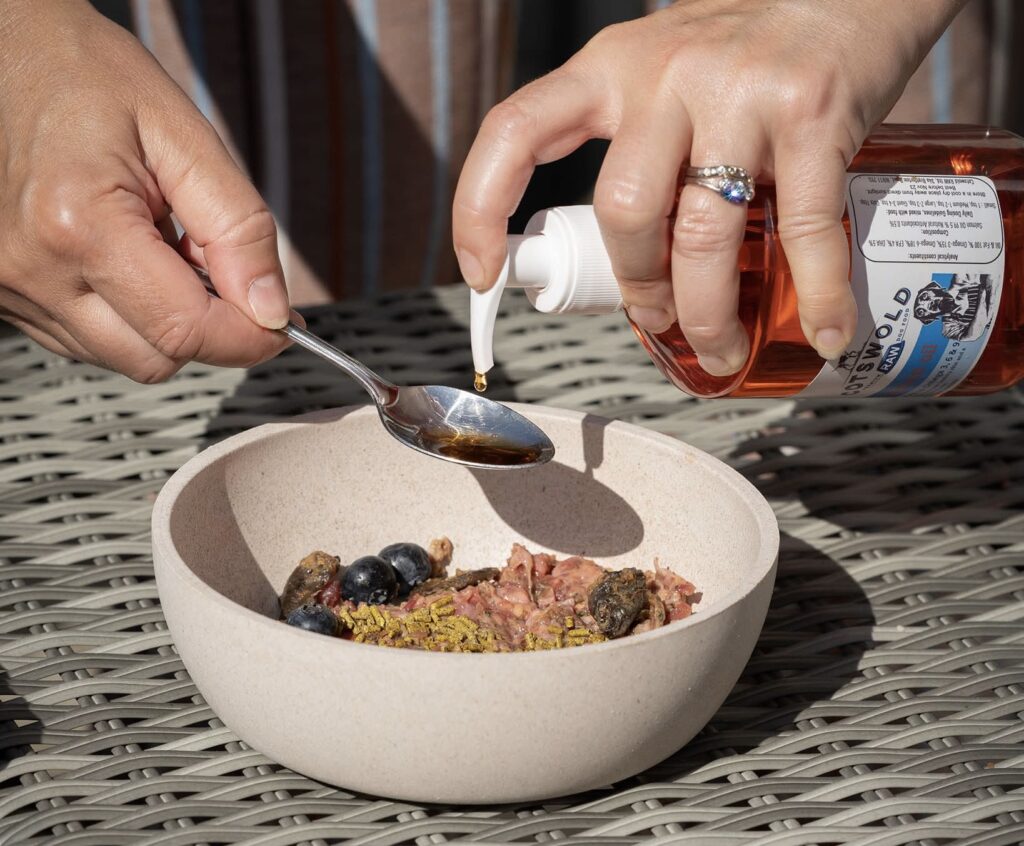
Inflammation contributes to kidney disease progression. Excess carbohydrates and cooked fats in dry foods increase Omega-6 levels and the Omega-6:3 ratio, promoting inflammation (3). Supplementing Omega-3 fatty acids, specifically DHA and EPA, provides anti-inflammatory and renoprotective effects (5). Experimental studies show DHA and EPA reduce proteinuria in dogs with CKD (11). Occasional oily fish, salmon oil, or flaxseed provide good sources of Omega-3s.
What Criteria Should My Raw Diet Meet To Help Chronic Kidney Disease In Dogs?
In the early stages of CKD, the best diet consists of fresh raw meat, greens, and herbs. As the disease progresses, you may need to adjust the diet by lowering phosphorus levels and adding omega-3 supplements. In end-stage CKD, protein intake may also need to be reduced.
Palatability is an important factor, especially for older pets. Toxins in the blood and a reduced sense of smell can make food less appealing (1). Raw food naturally contains fresh fats, which enhance taste. Fresh raw kidney is highly nutritious and supports kidney health, but it should only make up 3–5% of the diet to avoid excessive phosphorus.
Dogs with advanced CKD benefit from high-quality protein in smaller amounts. Feeding moderately restricted, high-quality protein reduces kidney workload and limits nitrogenous waste, which can worsen symptoms (1). Adding water-soluble vitamins through mashed fruits and vegetables can also help, as these nutrients are often lost due to increased urination.

References
- Collins, S. (2016) ‘The role of nutritional management of cats and dogs with renal disease,’ Veterinary Nursing Journal, 31(8), 237-240. Available at: http://dx.doi.org/10.1080/17415349.2016.1194634
- Brown, S. A. (2013) ‘Renal Dysfunction in Small Animals,’ MSD Veterinary Manual. Available at: https://www.msdvetmanual.com/urinary-system/noninfectious-diseases-of-the-urinary-system-in-small-animals/renal-dysfunction-in-small-animals
- Olson, L. (2010) Raw & Natural Nutrition For Dogs
- Brown, S. A. (2018) ‘Noninfectious Diseases of the Urinary System in Dogs,’ MSD Veterinary Manual. https://www.msdvetmanual.com/dog-owners/kidney-and-urinary-tract-disorders-of-dogs/noninfectious-diseases-of-the-urinary-system-in-dogs
- Cline, M. G. (2016) ‘Nutritional Management of Chronic Kidney Disease in Cats and Dogs,’ Today’s Veterinary Practice.’ Available at: https://todaysveterinarypractice.com/nutrition/acvn-nutrition-notesnutritional-management-of-chronic-kidney-disease-in-cats-dogs/
- Kerr, K. R. et al. (2012) ‘Apparent total tract energy and macronutrient digestibility and fecal fermentative end-product concentrations of domestic cats fed extruded, raw beef-based, and cooked beef-based diets, Journal of Animal Science, 90(2), 515-522. Available at: https://doi.org/10.2527/jas.2010-3266
- Stockman, J. (2024) ‘Dietary Phosphorus and Renal Disease in Cats,’ Journal of Feline Medicine in Surgery, 26, 1-6. Available at: https://doi.org/10.1177/1098612×241283355
- Patton, R. (2011) Ruined by excess, perfected by lack: the paradox of pet nutrition.
- Coltherd, J. C. et al. (2018) ‘Not all forms of dietary phosphorous are equal: an evaluation of postprandial phosphorous concentrations in the plasma of the cat,’ British Journal of Nutrition, 121, 270-284. Available at: https://doi.org/10.1017/s0007114518003379
- Billinghurst, I. (2001) The BARF Diet
- Parker, V. J. (2021) ‘Nutritional Management for Dogs and Cats with Chronic Kidney Disease,’ Veterinary Clinics of North America: Small Animal Practice, 51, 685-710. Available at: https://doi.org/10.1016/j.cvsm.2021.01.007
Lucy James, BSc (Hons) Bioveterinary Science
Looking to enhance your pet’s diet? Take a look at Cotswold RAW’s range of raw dog food and raw cat food, including raw meaty bones, dried treats, and puppy food.