So you have heard about the benefits of raw feeding and want to try it. Maybe you have researched dog nutrition or heard success stories from friends and family. Even so, switching diets can feel daunting. This guide gives clear, practical advice to help you transition to raw feeding and handle common issues, so you can feed your dog with confidence.
Straight Switch
We usually recommend a straight switch to raw. This approach works best for most dogs and keeps things simple for owners. Think of it as going cold turkey. A slow switch can delay or reduce the benefits of raw feeding, so we only suggest it if a dog struggles with a straight switch.
You can choose to fast your dog for 24 hours before the switch. This helps ensure your dog feels hungry and that stomach acidity is at its peak before eating raw food. If you prefer, feed the old food in the evening and offer a full bowl of raw food the next morning.
Slow Switch
Older dogs, or dogs with digestive problems, may do better with a gradual transition. You can take a few approaches, depending on how slowly you want to move.
- One option is to feed raw in the morning and the current food in the evening, or the other way around, for five to seven days. Leave 10–12 hours between meals so the stomach can fully empty before the next meal.
- Another option involves mixing the current food with raw food and slowly changing the proportions. This approach often gets recommended when switching between kibble brands.
Proportions when mixing foods:
- Day 1-2 = 80% current food & 20% raw food
- Day 3-4 = 60% current food & 40% raw food
- Day 5-6 = 40% current food & 60% raw food
- Day 7-8 = 20% current food & 80% raw food
- From Day 9 = 100% raw food
Opinions differ on mixing raw and processed foods. The enzymes used to digest meat and bone work best in a more acidic stomach, which raw meat encourages. Diets higher in cereals trigger less acid production and raise stomach pH. Because of this, combining the two foods may cause digestive upset in some dogs. That said, many dogs tolerate both food types well during the transition.
My Dog is Refusing Their Food
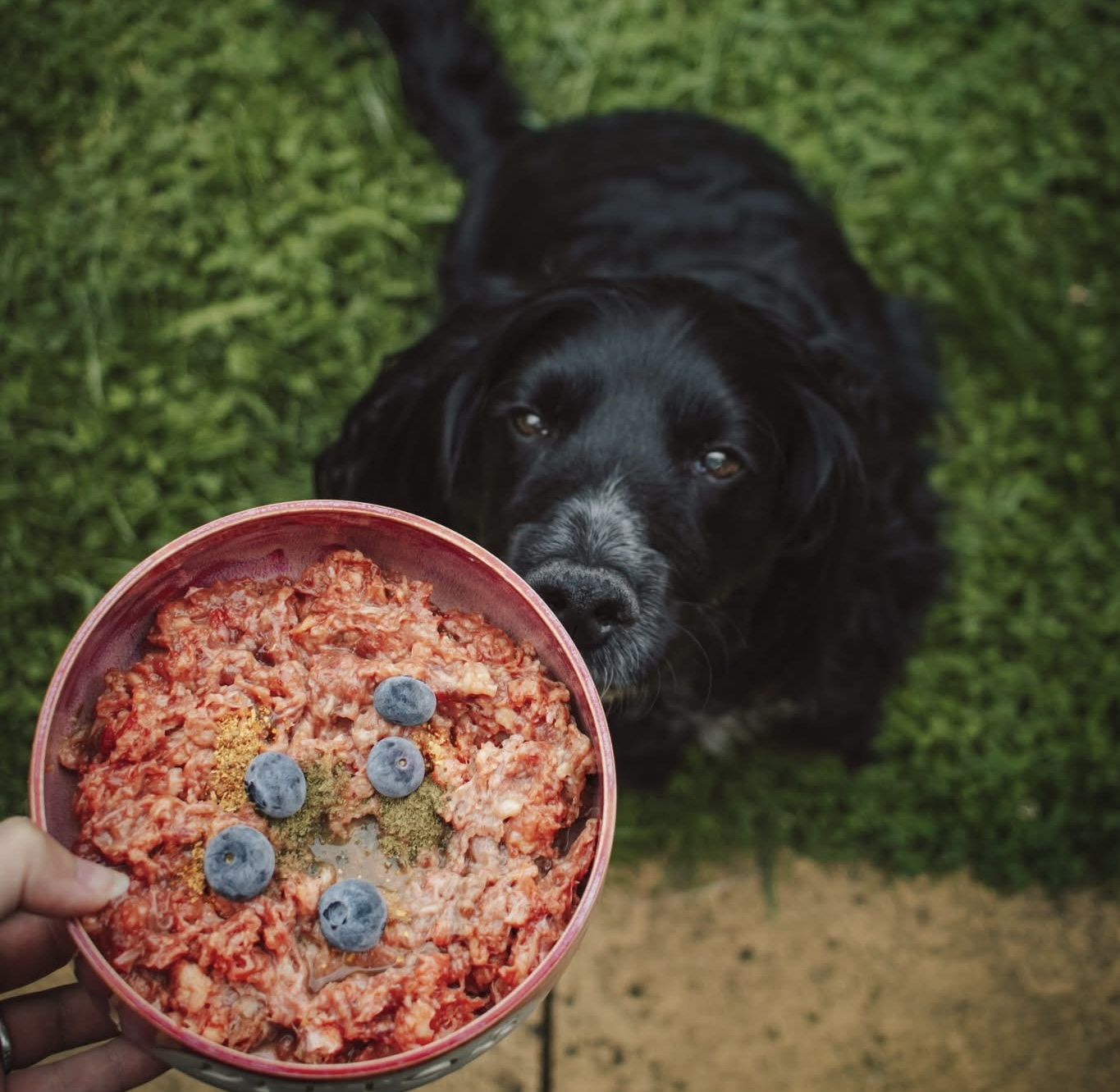
Most dogs eagerly eat raw food straight away. Some dogs, however, need more time. If a dog has never eaten fresh meat before, the new texture and smell can confuse them.
Lightly warming the food can help by releasing aromas. Do not cook raw food, as it contains minced bone. Instead, add a little warm water or place the sealed food in hot water for a couple of minutes before serving. We suggest warming food in a freezer bag or sealed container to keep the nutritious juices. Do not use a microwave.
Stay consistent and avoid giving in to fussiness. Some dogs enjoy the extra attention at mealtimes more than the food itself and quickly learn to hold out. Dogs evolved with extendable stomachs that allow them to eat large meals at irregular intervals. Healthy dogs can safely skip meals for several days. Do not worry if your dog refuses food for a short time.
Variety can also boost appetite. Try different protein sources and different raw formats. Our core 80/20 range comes as either a chunky mince or an easy-to-serve sausage.
My Dog Has An Upset Stomach
Runny Stools
Loose stools are not uncommon when switching diets. This usually means the digestive system is adapting to a more species-appropriate diet. Raw-fed dogs typically produce less stool overall because they digest the food more efficiently. In the long run, the change often proves worthwhile. You can add prebiotics and probiotics during the transition to support the gut microbiome.
Dogs with existing gut issues may benefit from bone broth. Bone broth contains glycine and proline, which soothe and support the intestinal lining. It also provides electrolytes and hydration during recovery from illness and can improve food palatability.
Vomiting After Eating
Vomiting immediately after eating is often actually regurgitation. This reflex helps protect dogs from unfamiliar foods. Dogs used to highly processed diets may regurgitate raw food if they lack the enzymes to digest it. In these cases, a gradual switch may work better. If vomiting continues or your dog shows other signs of illness, consult your vet.
Some dogs also struggle with fattier meats at first, such as lamb. Starting with leaner options, like chicken or tripe, can make the transition easier.
Recommended Staring Point
We often suggest the 80/20 beef and tripe as a starting point when switching to raw. It has a lower fat content and tends to be gentler on the stomach. Tripe also acts as a natural probiotic, with benefits explained here.
Getting Started – A short guide to switching
If you have a fussy cat you want to switch, note that the process differs. See our Switching Cats To Raw Guide here.
–
Lucy James | BSc (Hons) Bioveterinary Science
Looking to enhance your pet’s diet? Take a look at Cotswold RAW’s range of raw dog food and cat food, including raw meaty bones, dried treats, and puppy food.