
Dental (periodontal) disease is one of the most common health issues in dogs, with at least 80% affected by the age of three (1). This disease includes any inflammatory condition affecting the oral tissues and, if left untreated, can lead to tissue degradation and tooth loss (3). Periodontal disease is not only painful but can also contribute to systemic complications when left unmanaged (5).
Many vets believe that there is a close link between oral health and overall health, and with periodontal disease being one of the most prevalent issues in veterinary practices, maintaining your dog’s oral hygiene is essential.
How Periodontal Disease Develops
Plaque forms when salivary glycoproteins, food particles, and bacteria create a sticky biofilm on the teeth. If plaque remains in place, it mineralises and becomes tartar, a hard yellow or brown layer (2,3). Tartar shields bacteria, allowing them to proliferate and irritate the gums. The immune system attempts to fight back, which creates inflammation along the gumline. Over time this inflammation becomes chronic and can contribute to other inflammatory diseases in the body (2). Early intervention is far more effective than treatment later, which makes gingivitis, the first stage of periodontal disease, a critical point for prevention (3).
Unlike humans, dogs do not produce salivary amylase, the enzyme that helps break down starch. Bacteria in the mouth feed on the carbohydrates and sugars left behind by starchy foods. This promotes plaque production, tartar formation, and eventually gingivitis.
Signs of Dental Disease In Dogs
The earliest sign of trouble is usually subtle redness and inflammation along the gumline (gingivitis). Without intervention, more noticeable symptoms may appear:
- Drooling
- Pawing at the mouth
- Halitosis (bad breath)
- Reluctance to chew
- Facial pain
- Dropping food while eating
Does Dry Food Really Clean Teeth?
There is a common misconception that dry food ‘cleans’ your dog’s teeth, due to its harder, abrasive nature. It’s true that foods with a firmer texture can offer some abrasive action that reduces tartar (1). However, the effect kibble has is minimal, and does not provide the level of abrasion required to maintain good dental hygiene (4). Most dogs swallow kibble without significant chewing because their jaws move only up and down, not side to side, which limits the chewing motion they can perform.
High levels of simple carbohydrates and sugars in dry food provide readily available nutrients to bacteria residing on the teeth and gums (6). Since dogs lack salivary amylase, starchy residues linger on the teeth and promote bacterial growth. Additionally, low quality fats and highly processed ingredients can contribute to inflammation and do not support robust immune function.
The Research on Raw Diets
In contrast, raw food is free from synthetic ingredients and simple starches, providing less of the nutrients which oral bacteria rely on. Additionally, raw food contains fresh fats which do not exert the same inflammatory effects as cooked fats, which easily oxidise and become rancid. Whilst a raw diet alone is not a substitute for veterinary dental care and plaque removal, its low sugar and carbohydrate content can help to keep tooth decay at bay.
Recent research shows that dogs fed a non-processed, meat-based diet throughout puppyhood had a significantly lower risk of developing tartar later in life (5). On the contrary, dogs fed an ultra-processed, carbohydrate-based diet during this same period were at significantly higher risk.
Although the nutrient composition is favourable, a minced raw diet alone does not offer the abrasive effect which is required to scrape away plaque. This is where raw meaty bones play a key role.
Raw Meaty Bones: Nature’s Toothbrush
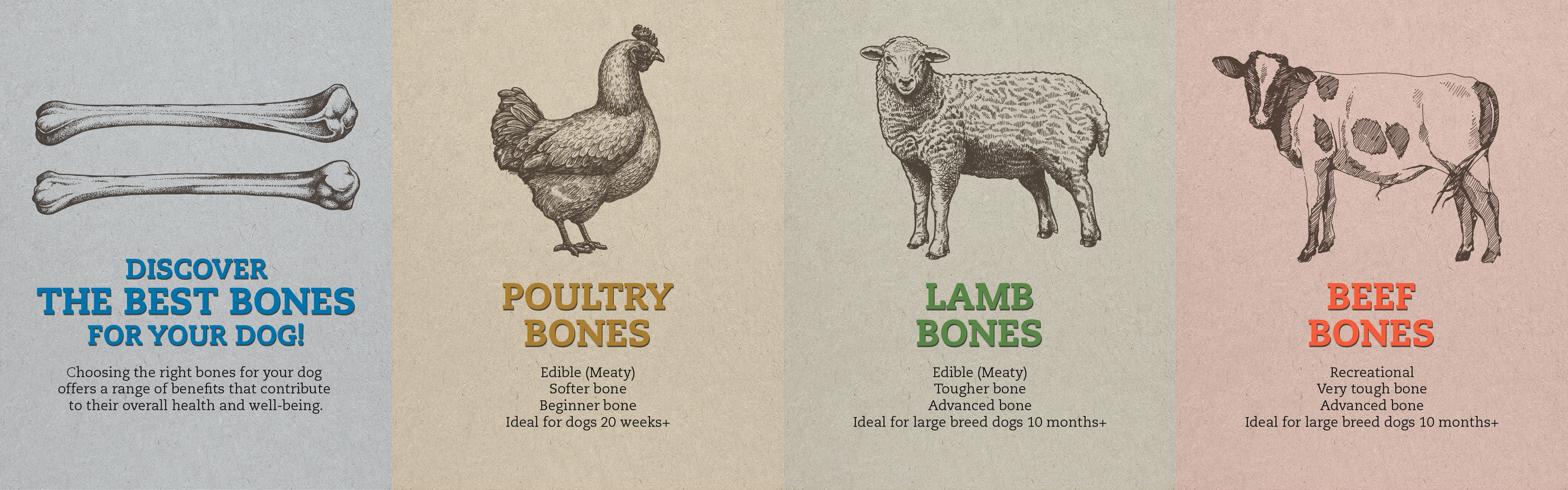
Raw meaty bones help clean the teeth through natural abrasion. Chewing on bone and cartilage effectively scrapes tartar from the teeth and massages the gums. Additionally, ripping meat off the bone acts as a flossing mechanism, a preventative measure against tartar formation between the teeth.
One study found that raw beef bones helped to control dental plaque in a group of beagles, reducing it by 36% after 3 days, and 71% after 12 days (7). No dogs in this study suffered any complications such as tooth fractures or intestinal provides obstruction.
It’s important to note that bones must always be fed raw. Raw bones are pliable, and the surrounding meat and cartilage provide lubrication during chewing. Cooked bones become brittle, indigestible, and more likely to splinter, which can injure a dog.
Unlike kibble, which is often swallowed quickly, raw meaty bones provide a long lasting, engaging chew that supports dental health. Feeding at regular intervals helps maintain these dental benefits. See our comprehensive guide on Feeding Raw Bones, to help choose what is most suitable for your dog.
Dental Chews and Natural Alternatives
Commercial dental chews often contain ingredients such as cereals and sugar. Whilst their shape the mechanical removal of plaque, their composition raises questions about their suitability for oral health. As a whole, there are many natural air-dried meat treats offer similar abrasive benefits without unnecessary additives.
Longer lasting chews can provide some of the enrichment and mechanical cleaning seen with raw meaty bones and are convenient for use on the go. A good example of these are lamb twists, which are twisted strips of meat with an uneven texture, making them a tougher, longer-lasting chew.
Brushing As Additional Support
Regular brushing remains one of the most effective ways to support oral health, especially if your dog is not keen on chewing. Many dog friendly toothpastes are available, and regular brushing becomes a highly beneficial routine when combined with an appropriate diet.
References
- Edlund, K. B. et al. (2020) ‘Dog Owners’ Perspectives on Canine Dental Health—A Questionnaire Study in Sweden’ Frontiers in Veterinary Science, 7(298). Available at: https://pmc.ncbi.nlm.nih.gov/articles/PMC7297050/
- Brady, C. (2021) Feeding Dogs: The Science Behind The Dry Versus Raw Debate
- Williams, I. (2013) ‘Nutrition and dental care,’ Improved Veterinary Practice. Available at: https://www.veterinary-practice.com/article/nutrition-and-dental-care
- Chandler, M. (2014) ‘Impact of nutrition on dental issues in companion animals,’ Vet Times. Available at: https://www.vettimes.co.uk/app/uploads/wp-post-to-pdf-enhanced-cache/1/impact-of-nutrition-on-dental-issues-in-companion-animals.pdf
- Hemida, M. B. M. et al. (2025) ‘Modifiable early life risk factors for dental calculus in dogs: a retrospective cross-sectional study in Finland,’ BCM Veterinary Research, 21, 430. Available at: https://bmcvetres.biomedcentral.com/articles/10.1186/s12917-025-04885-8
- Scott, D. (2021) ‘The Disturbing Cause of Dental Disease In Dogs,’ Dogs Naturally. Available at: https://www.dogsnaturallymagazine.com/the-disturbing-cuase-of-dental-disease-in-dogs/
- Marx, F. R. et al. (2016) ‘Raw beef bones as chewing items to reduce dental calculus in Beagle dogs,’ Australian Veterinary Journal, 94, 1-2. Available at: https://doi.org/10.1111/avj.12394
Looking to enhance your pet’s diet? Take a look at Cotswold RAW’s range of raw dog food and raw cat food, including raw meaty bones, dried treats, and puppy food.