Some dogs are naturally leaner than others, and their individual energy requirements can vary considerably depending on their age, breed, activity levels, and metabolism. For some dogs, maintaining a healthy weight simply means finding the right feeding amount for their individual needs.
If your dog is looking a little too lean, there are several simple feeding adjustments you can make to support healthy, gradual weight gain.
Before making significant changes, however, it’s important to consider whether your dog is genuinely underweight and whether there could be a reason they are struggling to maintain their weight.
Why might my dog struggle to maintain weight?
There are lots of reasons why a dog may be lean or find it difficult to gain weight, and not all of them are cause for concern.
Age and activity: Puppies grow rapidly and have high energy requirements, while particularly active dogs can also burn through considerably more calories. If their food intake doesn’t quite match their energy requirements, they may struggle to maintain weight.
Individual metabolism: Just like us, some dogs naturally have a faster metabolism and may require more calories than feeding guidelines suggest.
Neutering: Changes in hormone levels following neutering can affect a dog’s metabolism and, in turn, their energy requirements.
Illness or digestive upset: Vomiting, diarrhoea or excessive urination can contribute to fluid and nutrient losses, making it more difficult for a dog to maintain or gain weight.
Underlying health conditions: Certain digestive or metabolic conditions can affect how the body processes or absorbs energy and nutrients. If weight loss is unexplained or ongoing, it is always worth speaking to your vet.
Gradually increase their daily portion
Feeding guides are a useful starting point, but they are just that – a guide. Every dog’s requirements are different. Active dogs, naturally lean breeds and dogs with a faster metabolism may simply need a little more food.
As a general starting point, we recommend feeding adult dogs around 2–3% of their ideal body weight per day, but this should always be adjusted according to the individual dog.
If your dog needs to gain a bit of weight (and has the appetite for it), try increasing their current daily portion by around 10–15%, then monitor their weight and body condition over the following couple of weeks. For example, if you currently feed 500g per day, you could increase this to around 550g.
Choose more calorie-dense meals
Fat provides around 2.5 times the amount of energy as protein or carbohydrates, so opting for naturally fattier proteins can be a useful way to support healthy weight gain.
Not all raw meals provide the same number of calories. Choosing higher-calorie recipes can increase your dog’s energy intake without dramatically increasing the amount of food in their bowl.
Meals containing naturally fattier meats can be particularly useful for active dogs or those that find it difficult to maintain weight. For example, our lamb recipe provides around 2,141 kcal per kg, while our tripe recipe provides around 1,500 kcal per kg – a significant difference when choosing meals for a dog that needs additional calories.
Fat also plays an important role in the diet, including supporting hormone production and providing essential fatty acids. However, some dogs with gastrointestinal or digestive issues may not tolerate higher-fat diets particularly well, so this approach may not be suitable for every dog.
Feed little and often
If your dog struggles with larger portions, try splitting their daily allowance across two or three meals. This can make increasing their overall food intake more manageable.
While offering a much larger meal may initially seem like the quickest way to increase calorie intake, suddenly increasing portion sizes can overwhelm the digestive system and potentially cause discomfort or digestive upset. Smaller, gradual increases are usually a better approach.
Keep their diet balanced
It can be tempting to add lots of fatty meat, oils or extras to encourage weight gain, but we’d recommend keeping a complete and balanced raw meal at the heart of their diet.
Increasing their usual complete food means you’re increasing calories while continuing to provide the nutrients they need in the correct proportions.
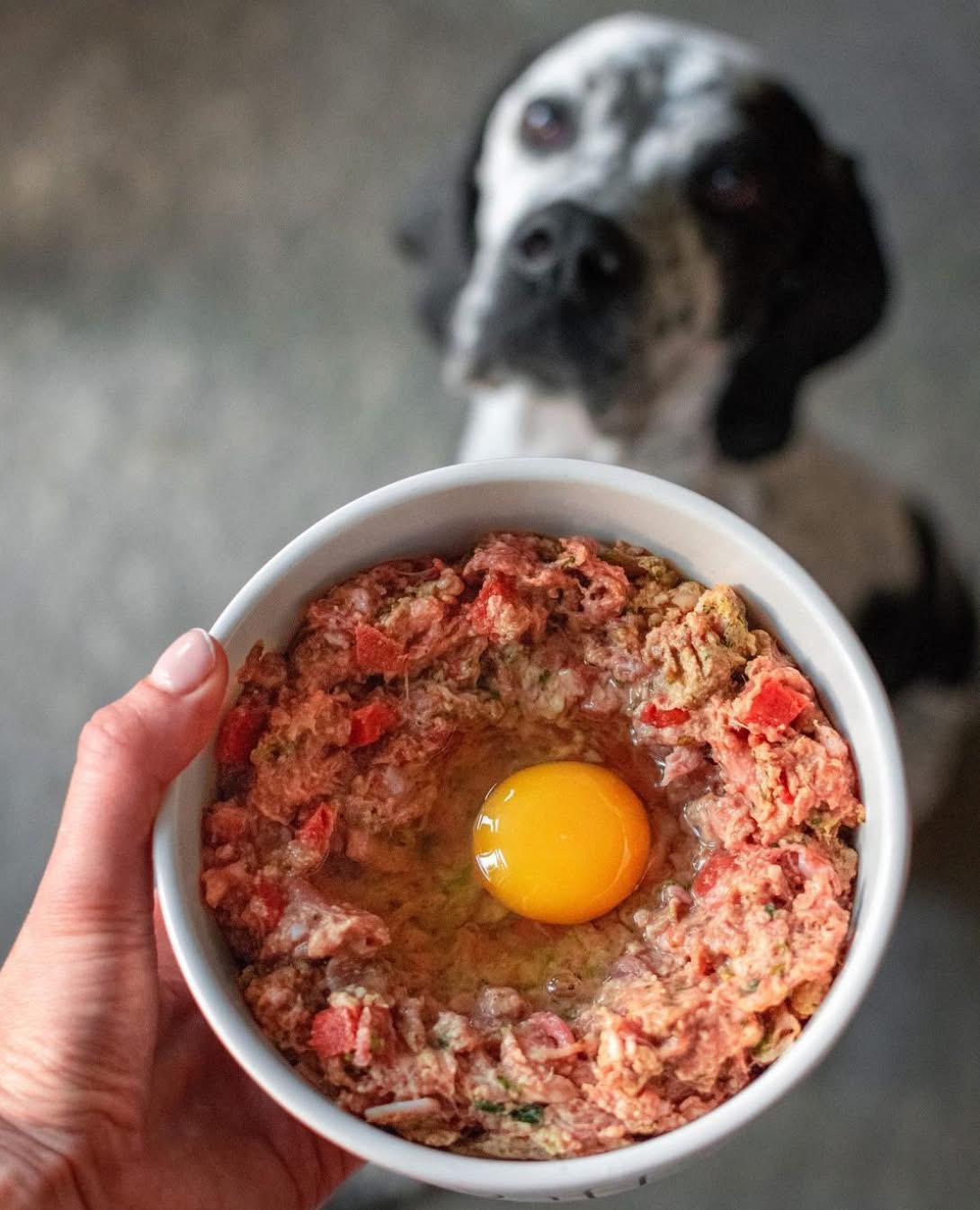
If you do want a simple and cost-effective way to add some extra calories alongside a nutritional boost, an egg can also be added to your dog’s meal.
Look at body condition, not just the scales
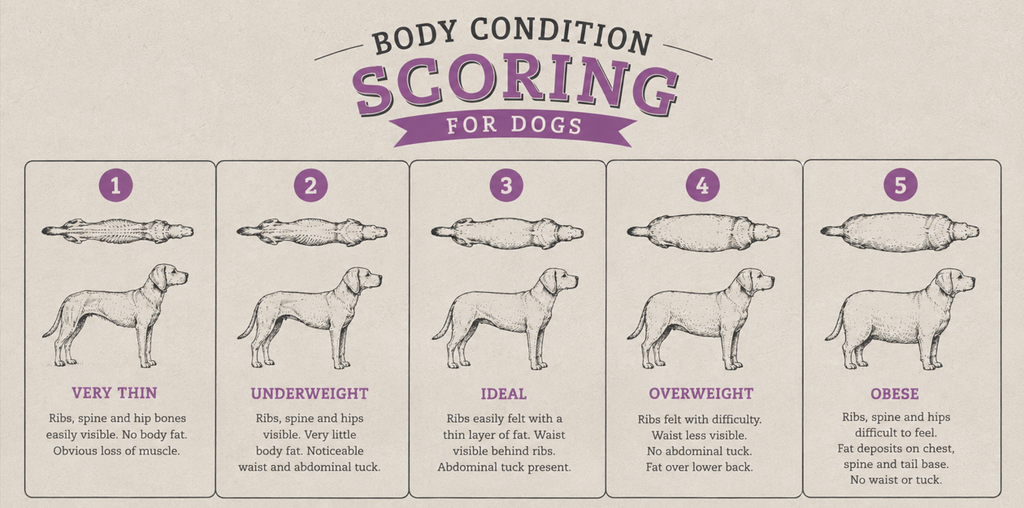
There’s no single ideal weight for every dog. Breed, build and muscle mass all make a difference, so looking at your dog’s overall body condition can often tell you more than the number on the scales alone.
At an ideal body condition, you should be able to feel the ribs easily without them being overly prominent, while your dog should have a visible waist when viewed from above.
Monitor and adjust
Weigh your dog regularly and keep an eye on changes in their body shape and condition. Healthy weight gain should be gradual, so make small adjustments to their food as their condition improves.
Once they’ve reached a healthy body condition, their portion can be adjusted again to find the amount that maintains their ideal weight.
A little note: If your dog is unexpectedly losing weight, continues to lose weight despite eating well, or is struggling to gain weight despite an adequate diet, we’d recommend speaking to your vet to rule out an underlying cause.