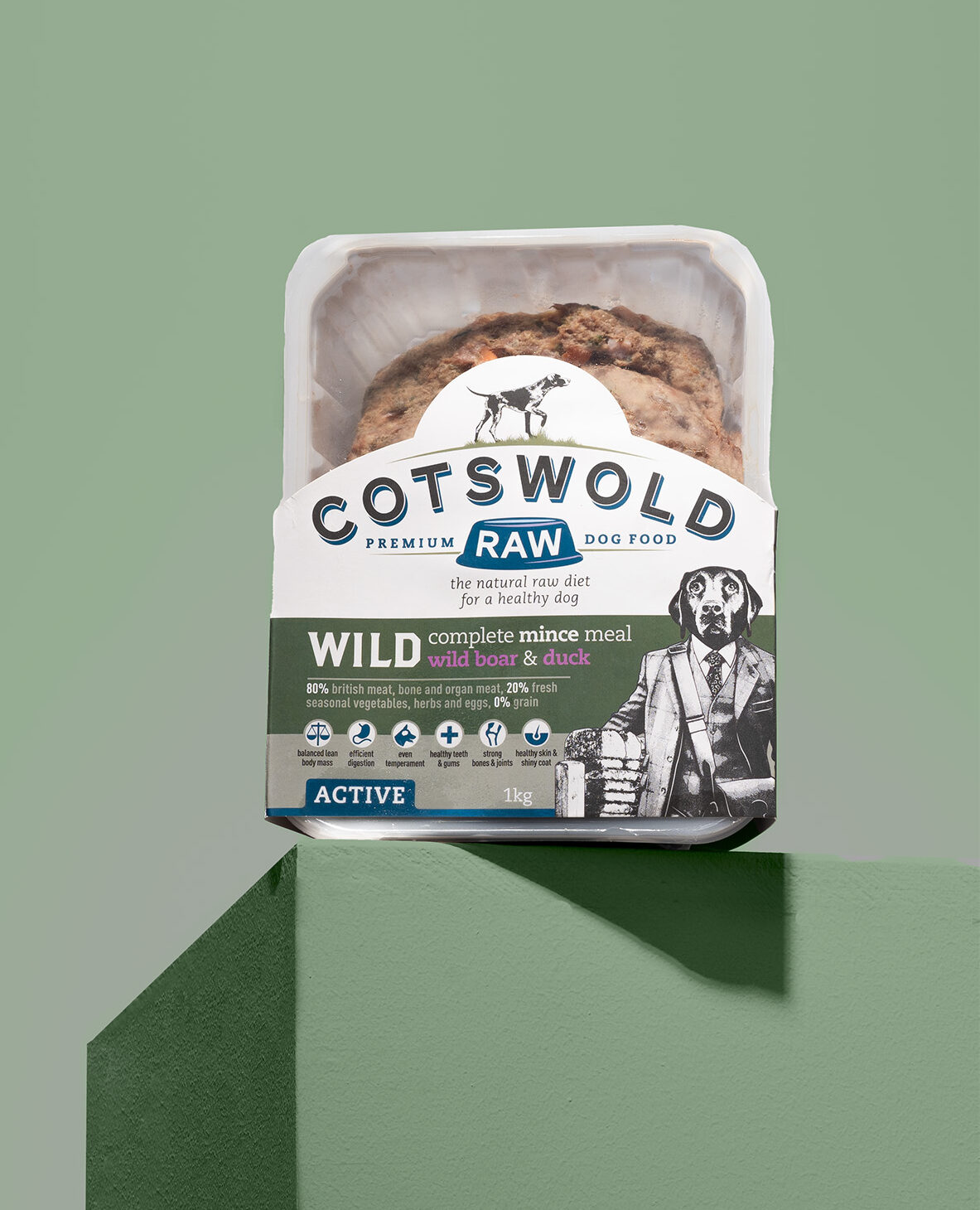
At Cotswold RAW, both our Active 80/20 and Wild Range recipes are formulated to support complete and balanced raw feeding, allowing your dog to thrive. Whilst your typical proteins, such as chicken, beef, lamb and turkey are highly nutritious and form complete and balanced diets, incorporating the occasional wild protein can enhance dietary diversity, and broaden nutrient intake.
For dogs with dietary sensitivities or poor appetite, wild proteins may also offer practical advantages.
Why Include Wild Proteins in a Dog’s Diet?
Most dogs on conventional diets consume a limited number of protein sources over their lifetimes. Whilst a complete and balanced diet does offer all the nutrients your dog needs, introducing additional proteins:
Mimics the Variety of a Natural Diet
In the wild, canines would consume a rotating mix of prey species, depending on what was available to them. Feeding a variety of proteins, whether farmed or wild, helps reflect this natural diversity.
Enhances Long-Term Nutritional Balance
Each protein source has a unique blend of amino acids, vitamins, minerals and fats. Rotating proteins can therefore help reduce the risk of nutrient gaps over time. See our full blog on protein rotation for more information.
Helpful for Sensitive Dogs
Wild proteins act as ‘novel’ proteins for many dogs. Novel proteins are simply meats your dog hasn’t eaten before, such as venison or duck. Dogs with suspected intolerances may benefit from proteins they have not previously been exposed to. As they are unfamiliar to the dog’s immune system, they can be helpful for dogs experiencing sensitivities, itchy skin, digestive upsets or inconsistent appetite.
A Good Option For Some Health Conditions
Many wild proteins are naturally leaner, containing high quality protein and lower amounts of fat. This can be a particularly helpful option for dogs requiring lower fat diets, such as those with pancreatitis or diabetes.
Wild Range Dog Food Recipes
Nutritional Profiles of Wild Proteins
Venison – A lean, yet nutrient dense option. Deer meat contains advantageous fatty acid profiles, including higher levels of polyunsaturated fatty acids (PUFAS). Consuming a natural, forage-based diet gives venison it’s boosted omega-3 concentration.
Duck – A flavourful meat, well loved by fussy dogs and ideal for those with a poor appetite. Duck fattier than typical game meat, so is helpful for boosting a meal’s fat content. Duck is high in iron, amino acids and fatty acids, which support skin and coat health.
Rabbit – A highly digestible meat, ideal for sensitive dogs. It’s lean and rich in Vitamin B12, selenium, phosphorous, and iron.
Pheasant – Pheasant boasts a higher protein content than most poultry, due to it’s naturally low-fat levels. It’s a darker meat, and naturally high in iron zinc, and B vitamins.
Wild Boar – A robust, tasty meat rich in B vitamins, low in fat, and ideal for dogs needing extra variety in their diet.
Wild Range: Frequently Asked Questions
As demonstrated, wild proteins offer an abundance of benefits and can do most of the legwork towards a complete and balanced diet, however they do need support from some other vital ingredients.
Why is Beef Offal Included in the Wild Recipes?
We use beef offal to ensure our food meets all the nutritional profiles required by FEDIAF standards to be ‘a complete and balanced meal.’ Beef offal contains high levels of taurine and important fat-soluble vitamins (A, D, E and K). Organ meats have some of the highest concentrations of naturally occurring vitamin D of any food source. Beef heart also contains selenium, phosphorus and zinc, along with essential amino acids that help build muscle, store energy and boost stamina and endurance. As our complete meals do not contain any synthetic vitamin mixes, it is important to get this balance correct. Beef offal offers the most consistent balance of these nutrients and has reliable availability.
Why is Turkey included in the Rabbit and Venison Recipe?
Both rabbit & venison are very lean proteins. Turkey is included for one very important reason – to ensure there is enough fat present. As our wild range meals are complete and balanced, they must comply with the FEDIAF guidelines for each nutrient, this includes fat. Without the turkey, these two proteins alone would not provide the appropriate fat levels required for maintenance. As discussed above, dogs use fat as an energy source and require it for the absorption of fat-soluble Vitamins (A,D,E,K).
Is Fat Good or Bad For Dogs?
In human nutrition, we often classify fats as “good” or “bad,” but dogs metabolise fat differently. They can tolerate large amounts of fats without the cardiovascular risks we associate with these fats in humans.
In fact, dogs readily use fat through a process known as beta-oxidation, which uses oxygen and generates energy to fuel their metabolism.
Fats increase caloric density (which supports energy, growth, and reproduction) and can be used in pet food to enhance palatability. Fat also supports the absorption of fat-soluble vitamins in the small intestine. Fatty acids such as omega-3 and omega-6, manage inflammation, immunity, cognitive function, and skin health.
Fat is the most digestible source of energy for dogs, offering over twice as much energy per gram compared to proteins or carbohydrates. However, dogs with certain health issues may require a diet lower in fat, such as those with a history of pancreatitis. Higher fat levels can overstimulate the pancreas in dogs with the condition, triggering the release of pancreatic enzymes. In this case, offering leaner proteins is beneficial.
Veterinary Insight into the Wild Range
One of our veterinary clients, The Wylie Veterinary Centre, has shared positive clinical experience using meals from our Wild Range:
“We’ve had success transitioning some clients—particularly those previously managed on exclusion diets—onto the Cotswold RAW Wild Range, specifically the Rabbit and Venison meals. These dogs have not shown adverse reactions to the inclusion of beef kidney, liver and heart, which has been very encouraging.”
This feedback highlights how carefully formulated novel-protein meals can be used successfully even in dogs with a history of food-related sensitivities, provided the overall recipe is well balanced and appropriately structured.
Explore our 80/20 Wild Range Today!
Looking to enhance your pet’s diet? Take a look at Cotswold RAW’s range of raw dog food and raw cat food, including raw meaty bones, dried treats, and puppy food.